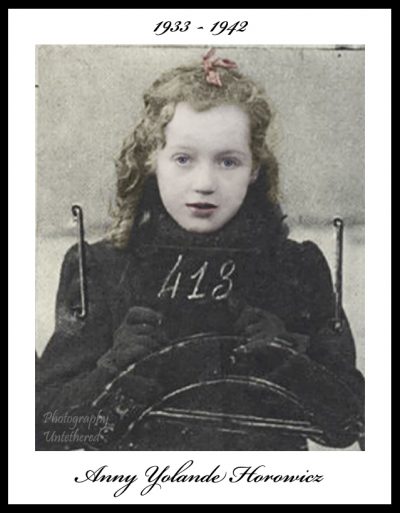
The Horowicz Family | Victims of the Shoah
Evicted:
In the early hours of the 1st December 1940, 7-year-old Anny Yolande Horowicz, her sister Paulette age 5, their parents Jacques and Frieda, left 21 Rue Rode, Bordeaux, and travelled the 3.6km to Bordeaux train station. In collaboration with the German authorities, the French regional prefect ordered the eviction of all foreign Jews from the coastal area of Gironde.
Frieda and Jacques (both Polish Jews) had lived and worked in France for over ten years. Nevertheless, their foreign and religious status meant Anny and Paulette, although both born in France, would also fall under this directive.

For Jacques and Frieda, this must have been a journey riddled with anxiety. Concerns and fears they would want to conceal from their children. As I write this, my daughter is the same age as Anny was that December morning in 1940. 7-year-olds are very intelligent and sensitive to others emotions; there is little they do not pick up on.
Was Anny full of questions, or was she aware that all was not well? Did she instead choose to act the big sister and provide reassurance to Paulette? The decree to detain all foreign nationals of the Jewish race in special camps; was enacted on October 18th 1940. When war broke out in 1939, the Horowicz family had left their home at Rue Geiler Strasbourg in the hope of escape to Spain.
They made a temporary home at 21 Rue Rode, Bordeaux, only a mere 200km from the Spanish border. Jacques and Frieda must have deliberated endlessly when the children were asleep the limited options available to them. The order to detain Jewish foreigners must have sounded alarm bells ringing. But was escaping to Spain a viable option at that time?
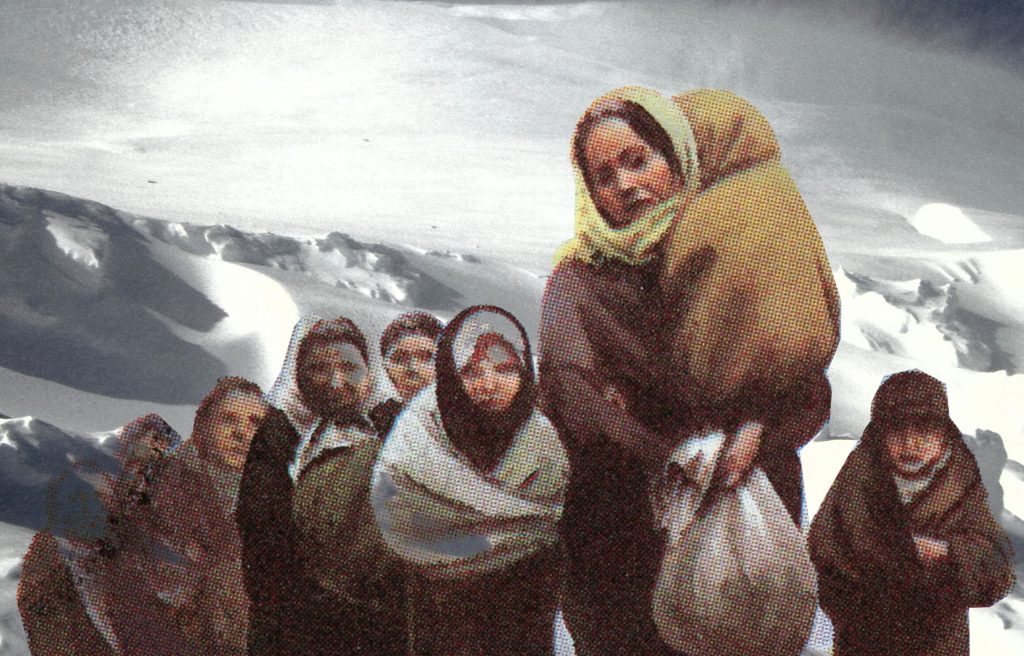
Spain And The Freedom Trails:
Two mass movements of Jewish refugees crossing into Spain took place right before and after the Nazi occupation of France. These pathways over the Pyrenees are known today as Freedom Trails. In mid-1940, however, Spanish dictator Franco Francisco, bowing under German pressure, ordered a halt to all visas. All illegals; were delivered to the German/Vichy authorities. That raises a question: In the months leading up to Franco’s decision to stop any further refugees coming into Spain, why did the Horowicz family never make it to Spain from their base in Bordeaux?
Of course, I can only speculate. Travel, especially for Jews, would have been restricted. Nevertheless, they were not required to wear the Star of David during that period. Given it would have taken weeks post-invasion for the Germans to organise control of the population — a window of opportunity would have existed.
Notwithstanding, the ordeals for refugees who escaped to Spain are far from over. The parents are arrested and jailed, either in local prisons or in Madrid. And the children are put into foster care. Fighting aged men (18-45); are interned at Miranda de Ebro Concentration Camp. Did rumours of these ordeals reach the Horowicz’s and deter them? Whatever led to the Horowicz’s staying in Bordeaux — that decision was to seal their fate.

Bordeaux Railway Station:
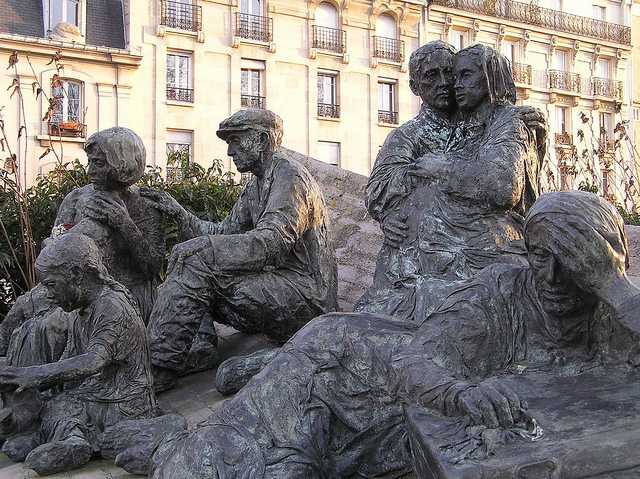
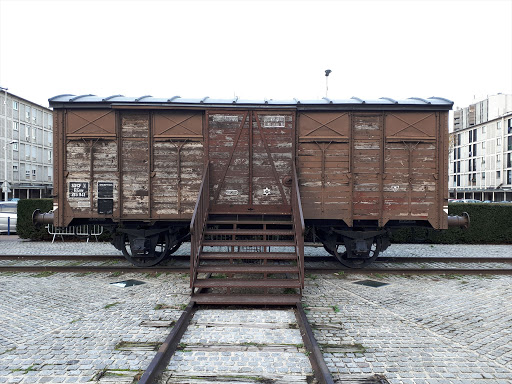
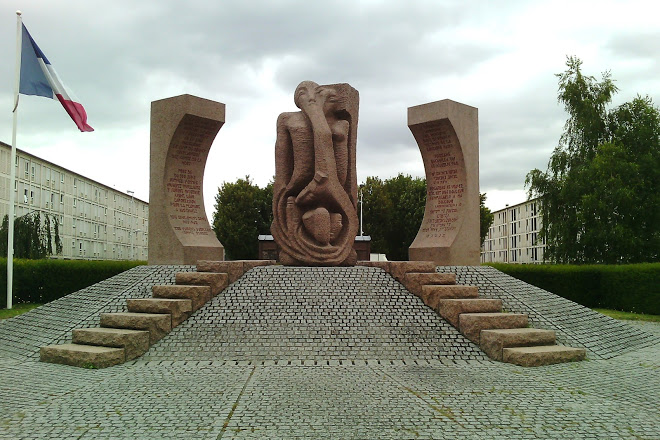
On that early December morning, Anny, her family and around another 450 men, women and children, arrived at Bordeaux railway station. All arrived weighed down by suitcases full of items deemed permissible by the authorities. The evocative memorial below is likely to be reminiscent; of the scene at Bordeaux Railway Station that early December morning.
La Lande des Monts Camp:
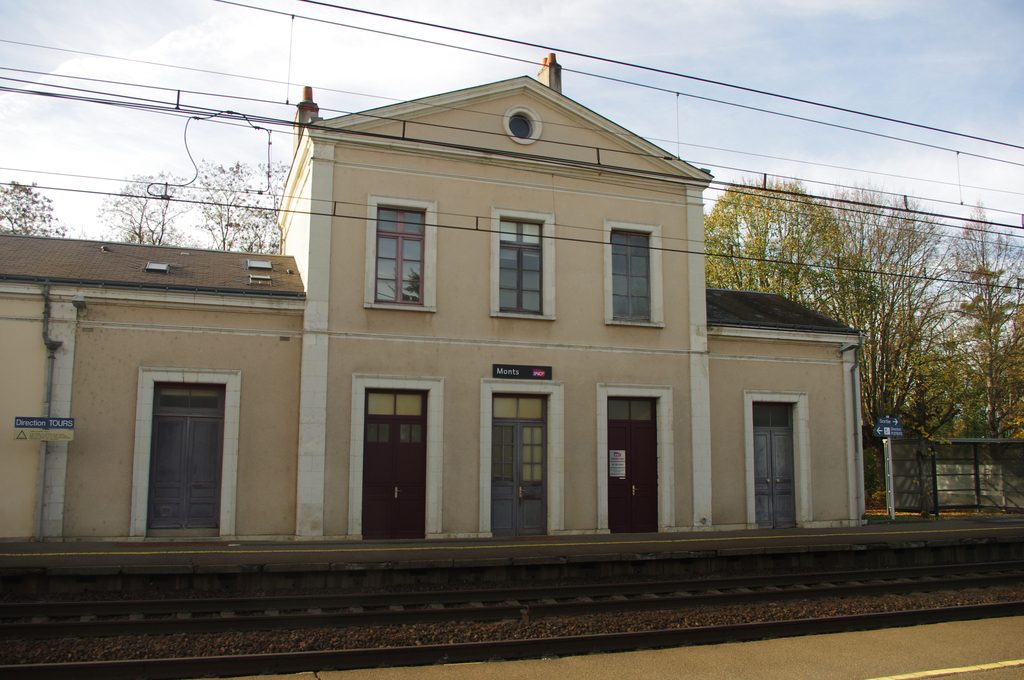
How long the registration process took is uncertain. Nevertheless, the group arrive at Monts Railway Station either that day or the following. From there, they are either transported by road or walk the 4.2 km to the “visitors centre” — La Lande des Monts camp.
Anny and her family are in one of two convoys of about 650 “foreign” Jews who arrive at the camp in early December. The Prefect delegate of the Ministry of Interior in the occupied territories; indicates in his letter dated December 3rd 1940, the arrival of the first convoy.
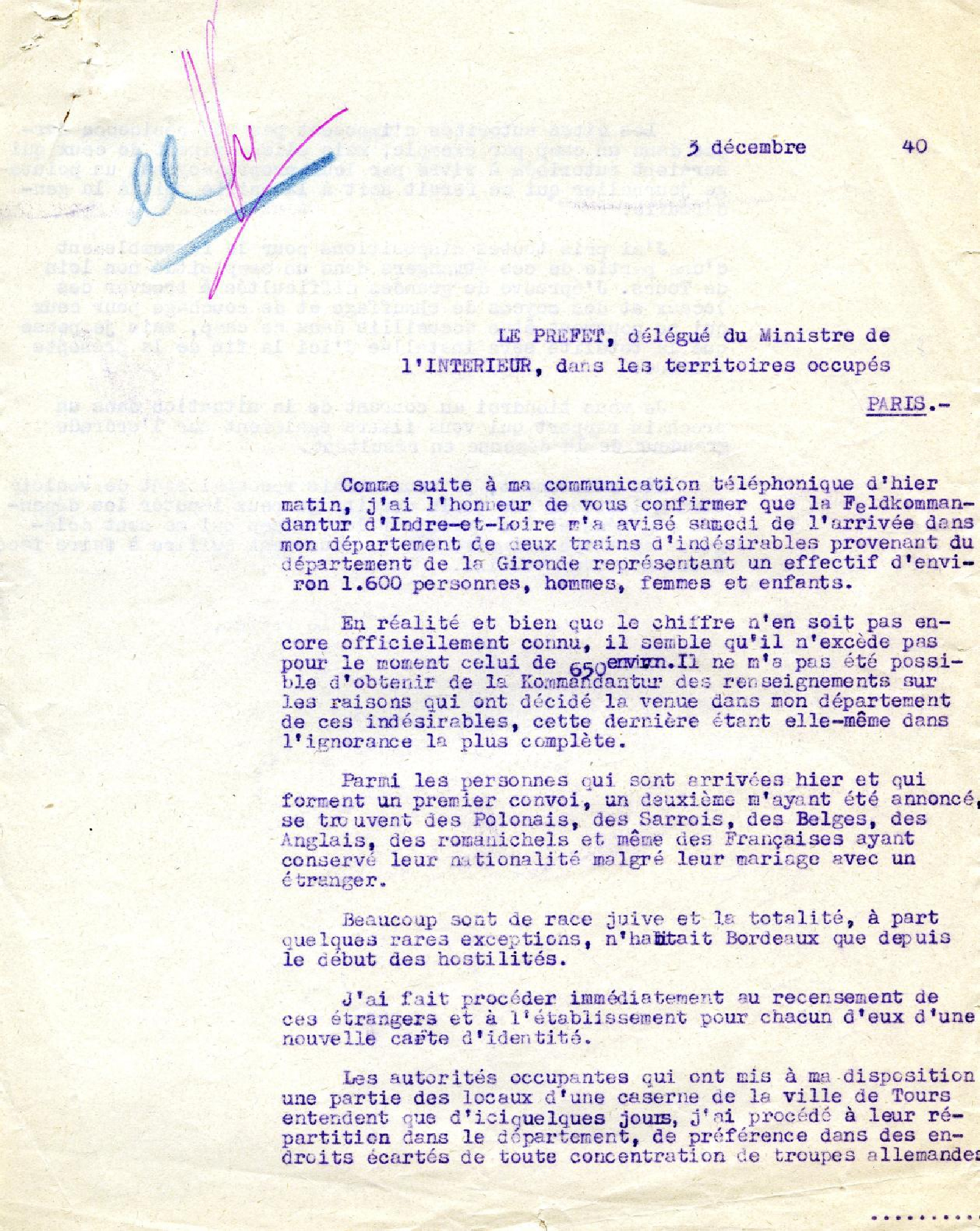
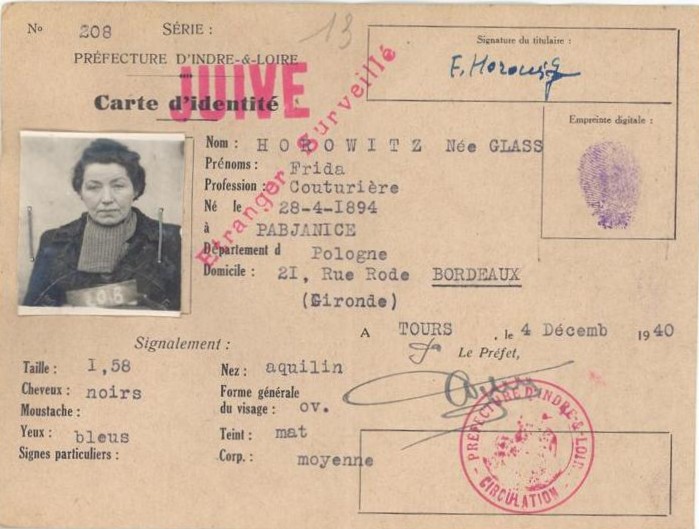
From this letter, we can draw evidence that the identity card and photograph of Anny and her family; were created at the camp on Monday, December 2nd 1940. The Prefect is informed by the military commander of Indre-et-Loire the previous Saturday; that two trains of “undesirables” men, women and children, representing a workforce of 1600, are to arrive at his camp, although this seems not to exceed 650. He stresses the camp does not have the infrastructure established to accommodate such a group of people; it will take at least another week of work. The Prefect urges for funds to meet the cost.
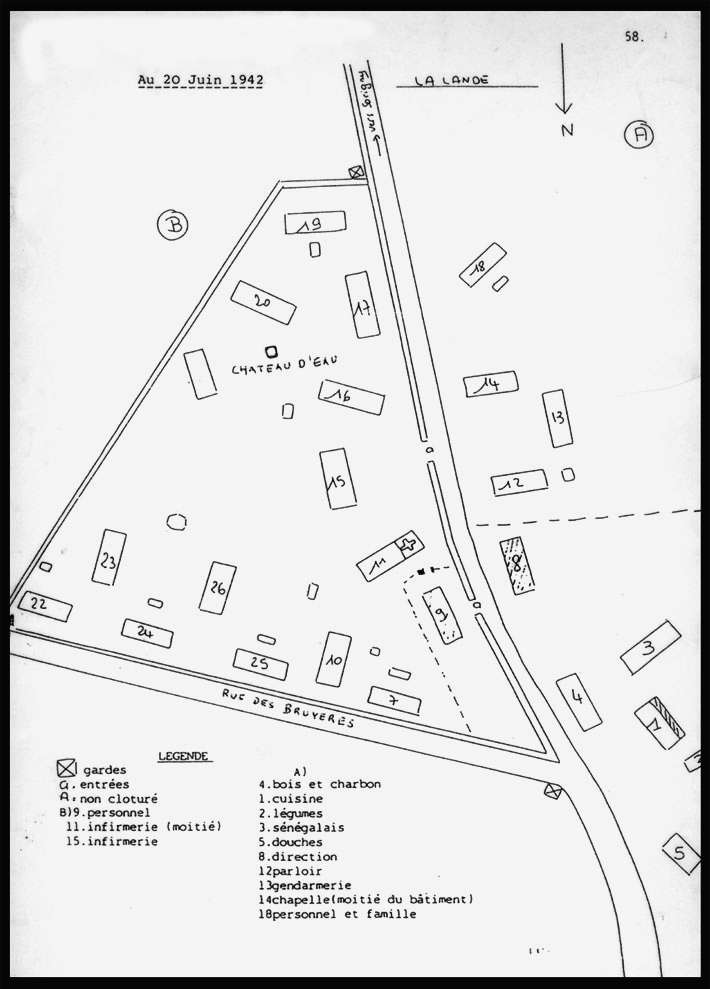
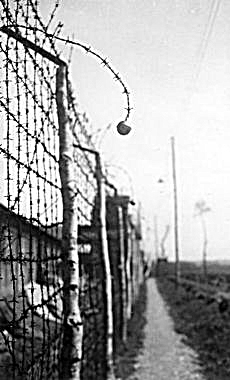
The camp was under French administration, and the perimeter was surrounded by barbed wire in November 1941. Nonetheless, providing individuals could cover their accommodation costs in the local area; forced residence was not mandatory: subject to daily reporting to the local police station or town hall. What Anny and her family choose to do is not known.
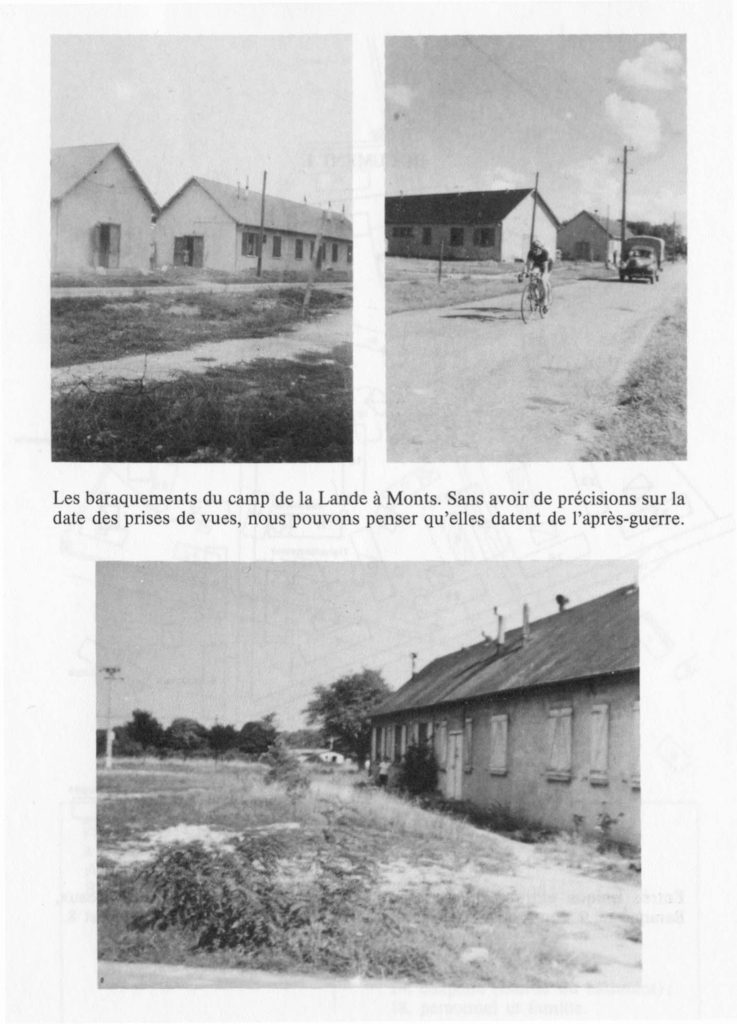
The camp was sealed on January 5th 1942, notwithstanding, it may be reasonable to assume that for a few months after their arrival, it was pretty much an open camp; but subject to daily curfews.
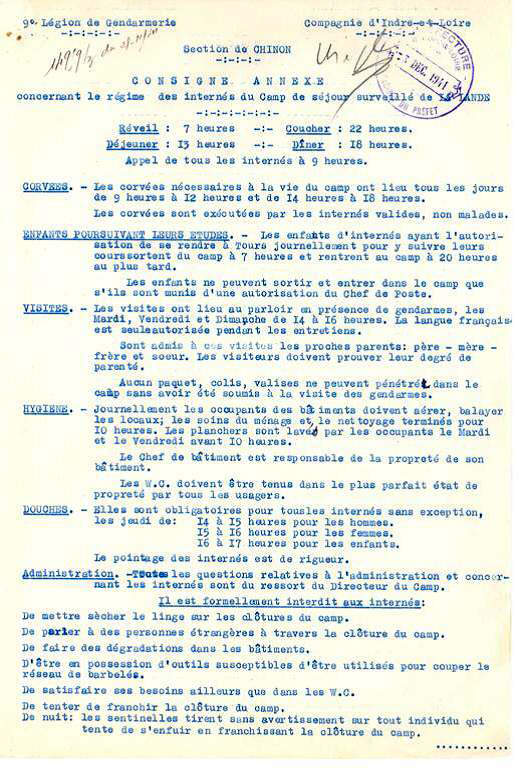
From November 1941, however, this free movement may have stopped — at least for the adults. Nevertheless, visits from family were still allowed on Tuesday and Friday in the presence of the French police. Rules on visits meant nothing about camp life could be discussed, and all conversations were held in French. Daily camp chores were to be completed by all fit internees, and each building had a block manager; who was responsible for ensuring cleanliness.

Separation:
On July 16th 1942, 133 men and women selected from the camp, are taken by truck to Angers. Presumably under the false pretences of work? Evidence suggests it is all most certain Jacques is among those selected?

Separation would be a difficult time for Frieda and the children. As a father, however, I cannot imagine how Jacques felt. The protection of his family was now firmly out of his hands. This feeling of complete powerlessness must have been overwhelming. I suspect Jacques did his best to reassure Frieda and the children that all would be well, that he would write as soon as possible to let them know of his likely return: whilst suppressing the emotions of fear and doubt welling within.
Frieda sent a postcard to her sister dated August the 10th 1942. Eve, Frieda’s niece, recalls: “Frieda expressed her desperation and that she had not heard from her husband for several months — that he had been — sent to work”.
I have not seen the postcard and cannot, therefore, determine whether the “several months”, is in fact “several weeks”; It could be an error in translation or memory; July 16, 1942, is the only date I can find for persons transferred from the camp.
Nevertheless, whatever the date, it marked a significant change in circumstance for Anny and her family. Frieda was deeply fearful for Jacques safety and the families future. One can only imagine the anxiety of being alone without news and having the responsibility of two young children in such a situation.
Anny was now aged 9, and Paulette was 7; both must have matured fast since the outbreak of war, and I cannot see how Frieda would have been able to hide her anxiety from them.
Jacques was from Zduńska Wola in central Poland. Jacques, along with his brother Abraham (known as Arthur) moved to France in 1928, initially working down the mines to build up some money. After working in the mines, the two brothers founded a modern printing house: “Horo” in rue du Faisan in Strasbourg.
On the outbreak of WW2, Arthur enlisted in the French army. When the French army capitulated, he was classed as a foreigner and interned in the camp of Soudeilles in Corrèze: where he died in 1941.
On July 20th, 1942, aged 45, Jacques departed Angers on convoy 8 to Auschwitz. Onboard were a further 826 men and women. On arrival, 19 men were found not up to the camp’s requirements — probably due to the horrendous transport conditions to Auschwitz. Records indicate these 19 men; were systematically executed by gas. Jacques was likely one of the 411 men selected to work at the camp. All 390 women, were chosen for work — none of whom — survived liberation.
Drancy:
Sometime in late August to early September 1942, Anny, Paulette, and their mother Frieda; were transferred to Drancy internment and transit camp, located in Paris over 260km away. The camp, built to house French troops, was left unfinished due to the war. The u-shaped multi-story building complex; (which still exists today) consisted of concrete floors with straw and minimal washing and toilet facilities; the rooms were left unpartitioned, and the windows had no glass.
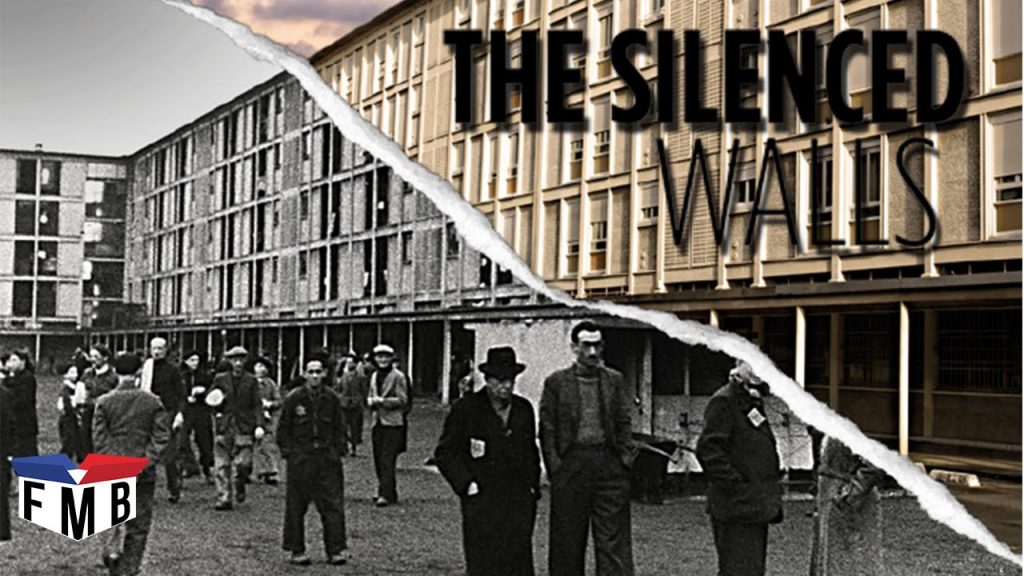
Barbed wire surrounded the building and its courtyard, and until July 1943, it was, manned by the gendarmes. The overwhelming majority of Jews deported from France were held here before their deportation. Despite the terrible conditions at Drancy, cultural and religious life endured. The Jewish High Holidays, Rosh Hashanah and Yom Kippur, were observed in a synagogue – established in 1941. Many prisoners attended Sabbath services regularly despite German prohibitions.
Books became available to set up school lessons and cultural evenings established. No record exists of how Anny and her family endured their time at Drancy; nevertheless, the continued cultural and religious life must have provided an aspect of support.
Convoy 31 | The Final Journey:
It was Friday, September 11, 1942, nearly two years had passed since their journey to Bordeaux railway station. Anny and Paulette were now without their father. Frieda, who was still desperate for news of her husband — faced deportation, along with her two daughters. This journey would see Frieda return to her place of birth — Poland. Frieda, Anny, now aged 9, and Paulette 7, and a further 193 children aged 2 to 16, and 807 men and women, are deported via cattle trucks for the 1500km train journey to Auschwitz II-Birkenau, Poland. Many children were unaccompanied, and some were too young to know their names.
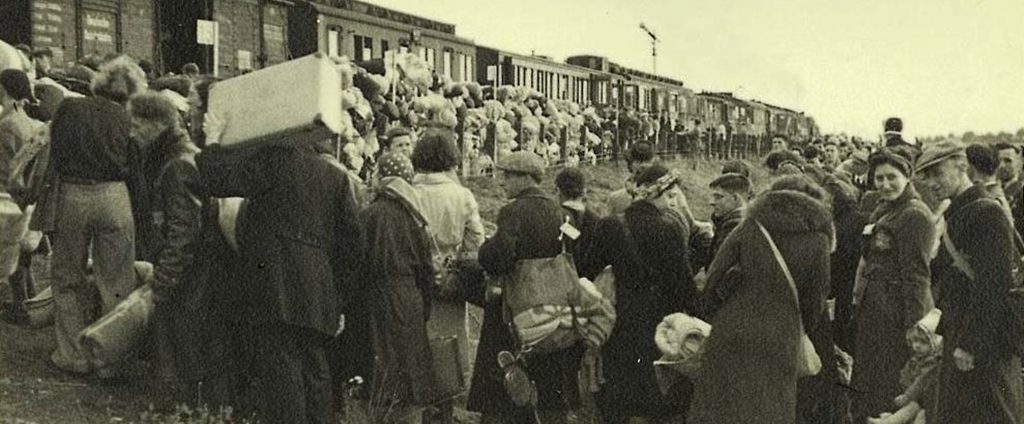
The journeys by cattle truck from Drancy to Auschwitz II-Birkenau were in themselves — callous; and barbaric. A minimum of 60 people; were crammed in like sardines. Food and water were non-existent, and toilet facilities consisted of a bucket or hole in the floor. No space existed to sit or stand in any tolerable state. The journey would last for two nights and three days, in conditions that were cruel and unbearable: and to think that without even the comfort of a guardian – very young children endured this. Those involved in the administration of these transports lacked even the most basic human compassion. Human beings became nothing more than statistics.
“What painful thoughts now possess the mother and her children. Your faithful father dragged away by the gangsters, and who knows whether he is still among the living? Who knows whether he has not already left you as orphans? Who knows whether you will be able to bear the double yoke of my despair and yours?
She has no thought for herself. The mother is absolutely unconcerned for her own life, for how can a mother worry about herself, when she is still not sure of the lives and existence of her children? The daughters look at their mother and groan. Dark misery covers their faces.
Imagine the scene. Restless children tormented by hunger and thirst. Parent’s utterly powerless and downcast helpless in their children’s torment: shout at them”.
Zalmen Gradowski “From The Heart Of Hell”
Imagine if one can, Frieda’s situation; to collapse into an abyss of despair would be all too easy. Sadly many did, through the wretchedness of their situation. Arguments ensued, and tempers frayed between loved ones. Some became indifferent, and those last exchanges would, unfortunately, — be their last.
The conditions of Convoy 31 to Auschwitz II-Birkenau, would have left few in doubt of the impending doom that awaited; if indeed, they could survive the journey?
Nothing is known; of how Anny, Paulette, and their mother Frieda endured that journey, nor the conversations that took place.
In writing about this family: I sense, however, a bond that would have endured to the end. The courage of a mother utterly devoted, forever loving, and loyal: no matter what hand – fate would deal.
When I imagine this scene: I see a mother holding her two girls close – two little girls comforted by the security and tenderness only a loving parents caress can give.
Scarcely three years prior, far from her home in Poland, France had provided the foundations of a new life. Jacques and his brother Arthur had started their own business. The prospects were good. Soon children followed. First Anny then Paulette. All had blended in well within the elegant City of Strasbourg. A city of magnificent beauty and culture where at its heart flowed the Rhine River. Days of joy and laughter at the Parc de l’Orangerie with Jacques and their young girls; the cornerstones of a happy life.
A happy life — reduced now; to the misery and filth of the cattle truck. Separated and without a word from Jacques Frieda’s dreams and aspirations now lay in the squalor of her surroundings. Whilst two young girls, hungry, thirsty and filthy — clung to her. She could only hope and pray; that this was not to be the end of their short lives. Rumours of the fate of previous convoys would have circulated Drancy. With the basic requirements of life denied them, pessimistic discussions must have been rife within the truck. To be crammed in without ventilation, food or water; how could any have faith in a good outcome?
Arrival | Auschwitz II-Birkenau:
The reception greeting these poor souls observed on arrival at the “Judenramp” outside Auschwitz II-Birkenau; was a menacing group of soldiers armed with whips and dogs. The instant the cattle truck doors drew open, oxygen surged in, and life-giving fresh air infused the apathetic mass. Nevertheless, shouts of “rouse rouse” and the general aggressive nature of the soldiers and dogs; soon gave way to an impression of fear; and impending doom.
As the people climb down from the cattle trucks, their scanty possessions are torn away and cast into one big pile. Orders are barked for the 1000 souls to split into two groups; men in one group and women and children in the other. For many, this was the irrevocable breaking of family bonds. With heavy blows to the head, the guards quickly punished anyone not quick enough to conform.
Impotent, and defenceless the two groups go through the hideous selection of life and death. With the wave of a hand, a Doctor trained to save lives instead selects those deemed unworthy of life; the rest would experience slow death through slave labour.
Even in the darkest of dreams, we cannot conceive how human morality could have sunk to such an abyss; as to create a system of massed calculated murder of not only adults; but children too.
Figures suggest that of the 1000 men, women and children aboard convoy 31: 920 were selected for murder by gas or died on route. The eighty adults left were used for slave labour: records indicate that only thirteen survived the war.
Frieda — a mother with two young children — would have automatically been selected for the gas chambers. That Frieda, Anny and Paulette were together to the end — one would hope that this was the case — and something from which they could all draw courage.
To reflect on this systematic killing of children is to transport oneself into a very dark place. As I write, my daughter is the same age as Paulette when she died. To envisage their final hours and then look upon your own daughter — leaves a deep, lasting impression.
“Can we find within us the strength to imagine what the people in these chambers felt, what they experienced during their last minutes of life? All we know is that they cannot speak now . . .” | Vassily Grossman
Was Anny’s father still alive at this point?
In all probability, he was alive at Auschwitz when his family arrived at Auschwitz II-Birkenau. Subsequently, at some point, Jacques died.
Did Jacques ever know his family had arrived on the transports? We can never know. Nevertheless, if that were so, he would have understood their fate. It is with a sincere hope that Jacques — was spared that knowledge.
Yahrzeit:
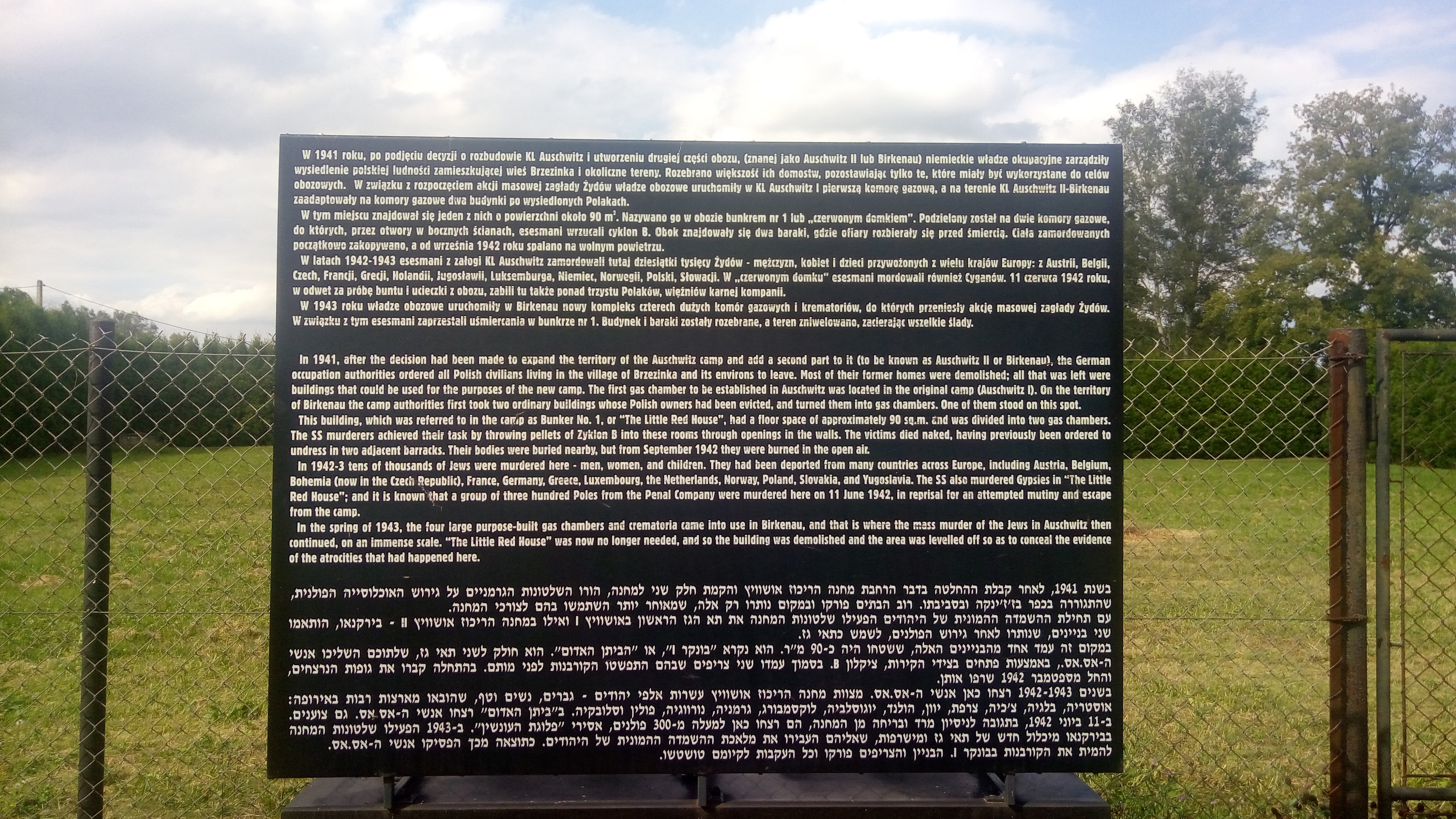
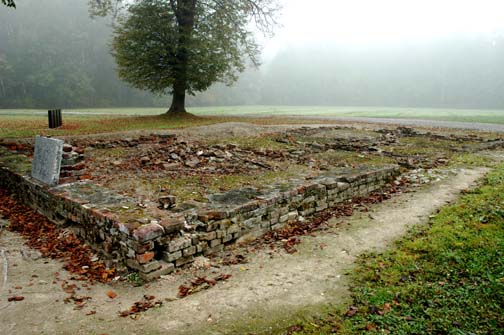
The two bunkers above, known as “The Little Red House” and “Little White House” were two old farmhouses used as gas chambers when Anny and her family arrived in Sep 1942. Assuming they all died together in the same place — which is more than likely — then one of these locations is where Anny, Paulette, and Frieda; were brutally murdered by the Nazi regime on the 13th or 14th September 1942.
In September 1942, the procedure was to burn the victim’s bodies in the open air instead of being buried in pits. This suggests the bodies of Anny, Paulette, and Frieda incurred the same treatment — a final act of savagery. One cannot even imagine the impact this had on the Sonderkommando inmates whose task was the removal and burning in the open; of nearly 200 children that day!
Human evil in WW2 was surpassed only by the colossal human suffering. Innumerable families suffered in WW2, yet; countless stories of misery, torment, and heroism; will forever — remain unknown. Nonetheless, the Jewish experience in WW2 is unique in the annals of human suffering. For the first time in known history, factories of death constructed through precise planning and organisation on a scale previously unknown; systematically murdered and recycled people.
This massed calculated evil is practically beyond human comprehension. And yet, a highly cultured civilisation was behind it all.
Drawn to a little girls face in a book by Serge Klarsfeld, I wanted to know who she was — and the story behind the face. I think over time, I have learned more than I could have hoped about her short life. In a way, I feel I have managed to transcend time and connect with Anny and her family. Working with a grainy photograph of Anny — I sense I have got to know her — with colour — given her life. It would be wonderful to find a photograph of Paulette; hopefully, this will happen. Nevertheless, 80 years on, this family now have a voice. An ordinary Jewish family; that fell victim to an ideology — that deemed them unworthy of life.
Eve Cerf-Horowicz:
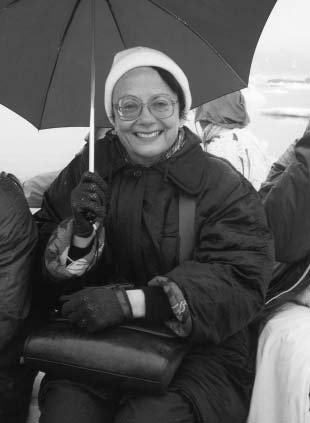
I am grateful for the information left by the late Eve Cerf Horowicz. Eve was a cousin to Anny and Paulette. Her father, Abraham Isaac Arthur Horowicz — brother to Jacques — was one of 3,000 Jews who died in French internment camps; Ironically, Arthur had fought for France at the start of the war.
Eve writes: “Like all the neighbourhood children, both girls (Anny & Paulette) attended kindergarten Vauban. My memories, and also photos taken on school steps and at the Parc de l’Orangerie, testify to their games and laughter in front of a flower or a bird. This is the happy and mundane life of two girls well integrated into their family, and the city.”
Eve was born in 1933, the same year as Anny. Her childhood was short, as she evaded arrest and deportation with her mother Frida. During her time in hiding, she first learned of her father’s death and later about the deportation of all her paternal family. Eve reflects: “Like so many survivors, I was frozen for a long time in insurmountable mourning.”
Eve had the same large blue eyes as her cousin Anny. She studied hard, married, and had a successful academic life in Social Science. She continued to live and work in Strasbourg. Eve, however, suppressed for many years the suffering WW2 brought her family; and the subsequent anger provoked by the unwillingness of France to acknowledge its role in the holocaust.
Unbeknownst to Eve, the publication of the book French Children of the Holocaust: A Memorial; featured the photo of Anny on the cover. She first discovered this in a newspaper article. She immediately recognised the little girl she knew to be her cousin Anny. Years of suppressed emotion that, through fear, as a child — she had buried — erupted in a distressing cry.
Eve could never come to terms with how members of the French establishment collaborated with the Nazi policy and took advantage of the status quo to persecute and deport French nationals of the Jewish race, Roma, and other foreign nationals. Eve raised awareness of this national amnesia in L’adieu à une enfant défunte” (1995)
Collaboration:
Anti-semitic sentiment continued in France post WW2. French collaboration; was seen as an embarrassment, and subsequently, even at the highest level, silence prevailed.
President François Mitterrand insisted: “France was never involved in the ill-treatment of its Jewish population.”
This statement, however, was also seen as self-serving in light of Mitterand’s controversial past involvement as a civil servant in the Vichy Regime. Many in France were reluctant to re-visit a past that may expose their guilt and complicity.
It was not until 2009 that the highest court in the French judiciary put an end to decades of legal timidity and moral taboo; when it issued a ruling recognising — the responsibility of the state — in the deportation of tens of thousands of Jews during WW2.
Almost 7o years later (2014), in exchange for recipients relinquishing their right to sue, was a compensation agreement reached. “Forty-nine people who made it out of the Holocaust alive are receiving around $400,000 each”, said former Ambassador Stuart Eizenstat, the State Departments expert adviser on Holocaust-era issues, who helped negotiate the agreement. Thirty-two spouses of deportees who died will get up to $100,000, depending on how long their spouse lived. “Heirs and estates of deportees or their spouses are also getting paid”, officials stated.
France, however, was not the only country that collaborated with Nazi policy. The Nazis exploited existing anti-semitic sentiment, ethnic issues, greed, resentment, etc. in all occupied territories. No country was free of collaborators, whether at the state level or individual; this is the reality of human complexity.
History is never black and white; only through the study of history; do we see the hidden layers of complexity. Moreover, this study is essential; if one is to understand how an authoritarian regime can come to power. Dogmatic ideology left or right, in the perfect storm, can create Hell on earth; the lessons are there.
The Promised Land:
The tragic irony of this narrative; has to be the retelling of the Exodus of Egypt by Eve’s father. Arthur one day recounts the biblical story to the attentive ears of Eve and her cousin Anny. The two enthusiastic little girls learn how their fathers left Egypt and found the promised land: France.
Whilst Arthurs version of events may have differed from the original, it was, however, symbolic of their journey to France. Specifically, in Strasbourg, they had found their promised land – everything they had dreamed.
Tragically Strasbourg would prove far from the promised land.
The Reich University of Strasbourg, founded in 1941, was to house the most macabre display in human history. Given the Nazi plan to systematically eradicate the entire Jewish race, the Nazis devised an obscene anthropological plan. The aim was to prove the alleged inferiority of the Jewish people.
At the Reich University in Strasbourg, the anatomist August Hirt sought to utilise Auschwitz to find suitable candidates for a Jewish skeleton collection. In June 1943 Nazi scientists Wilhelm Gabel, Bruno Beger, and Hans Fleischhacker, arrived in Auschwitz. Their task was to select those matching the Jewish characteristics identified by Nazi racial ideology; from a pool of 115 Jews.
Eighty-nine were selected, twenty-nine women and sixty men. These unfortunate victims went to Natzweiler-Struthof Concentration Camp near Strasbourg; three men are believed to have died en route. The remaining eighty-six were systematically murdered by gas on the 19th August 1943 and transported to the Reich University. Their bodies were eventually; discovered by the allies in 1944.
Work published in 2004 by Hans Joachim Lang eventually revealed the victim’s identities – find out more here. And so it was with tragic irony; that the Horowicz family would find their promised land in the city intended to exhibit the planned to be extinct: Jewish people.
Horowicz:

Some readers may be confused by the spelling Horowicz. Anny Yolande Horowitz is the printed name on her identity card. Nevertheless, a closer look at Anny’s signature will clearly show the Polish spelling Horowicz. Anny’s cousin Eve used the name Horowicz; and submitted that spelling for Anny and her family to Yad Vashem, in 92. Due to the confusion of the identity card, Anny’s name is spelt Horowitz throughout the internet. I thought it was vital to get the family’s surname correct. Although this post may be missed, by anyone searching for Anny Yolande Horowitz?
La Déportation Des Enfants:
“One million five hundred thousand Jewish children were murdered in the Shoah.
Man will never be able to face this fact with full comprehension.
Every child was at the dawn of life. Each one was an entire world.
They were mere children when they saw, in the flesh, how people, families, and humanity itself were torn to shreds.
Most of the children who perished left no trace. Very few of their diaries, letters and drawings survived.”
Anny & Paulette Horowicz were only 2 of approximately 11,400 Jewish children to be deported from France to the death camps during WW2; this was their story.
Holocaust further reading:
“History Doesn’t Repeat Itself, but It Often Rhymes” – Mark Twain
There is a vast amount of literature available on the Holocaust and some recommendations I have listed below:


The Auschwitz‑Birkenau Memorial and State Museum represents a duty to remembrance and the education of future generations throughout the world.Profits from the site links on this page will go to the above; please consider a donation.
Fragmented Memory 🙂
Disclosure: Photography Untethered is a participant in the Amazon Services LLC Associates Program, an affiliate advertising program designed to provide a means for sites to earn advertising fees by advertising and linking to Amazon.co.uk


I warmly welcome . I just read this article. I am Polish and I live in Łask. It is a town 12 kilometers from Zduńska Wola and 12 kilometers from Pabianice. Before the war, 70% of the population in my town were Jews. I am interested in their fate during and after the war. Please give me any information. Greetings Piotr.
Welcome Piotr,
Thank you for your message, it is of such interest that you live close to the hometowns of Anny’s parents.
See link below:
https://www.shtetlinks.jewishgen.org/Lask/Lask%20Jewish%20History.htm
https://www.jewishgen.org/yizkor/Lask/Lask.html